



The Confident Patient: Managing Care and Treatment
The ConfidentPatient:A Doctor Discussion Guidefor Navigating Heart Failure
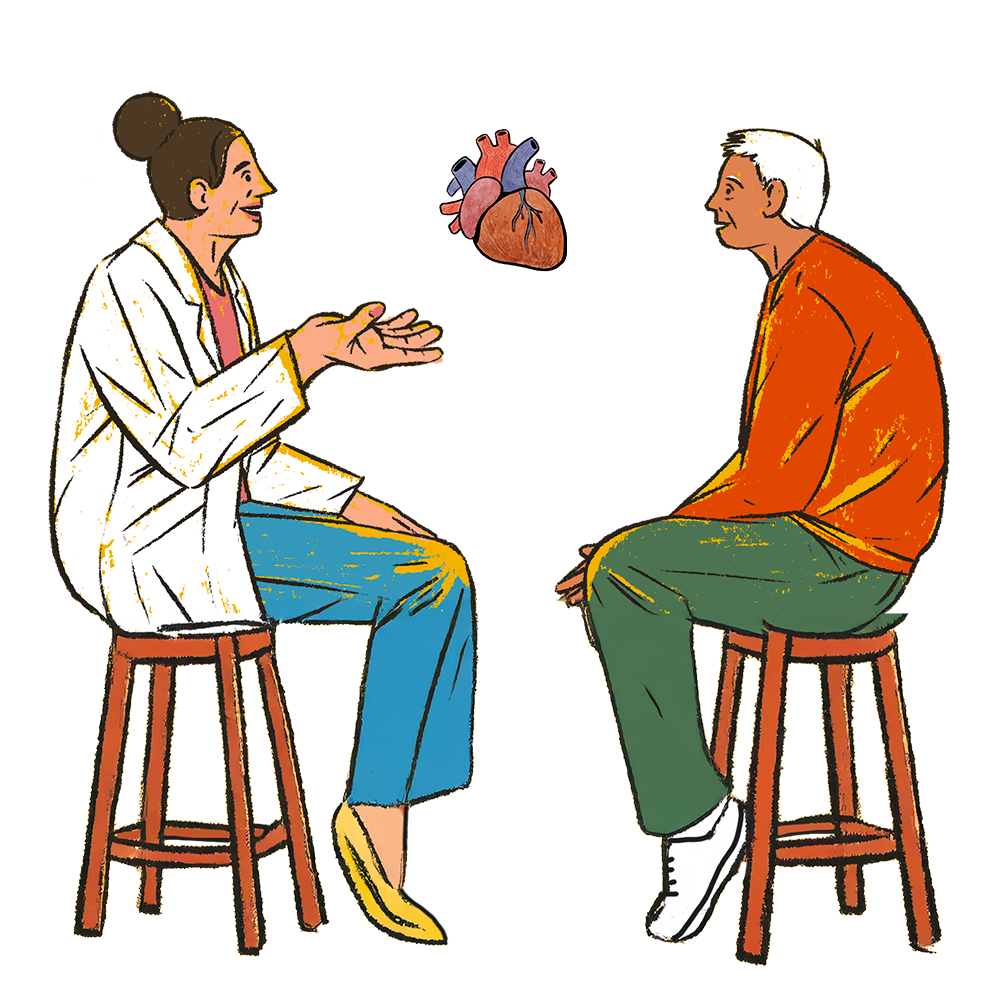
Looking ahead
Living with heart failure can come with a lot of small changes – some you notice right away, others that seem to slip in slowly. Maybe you’re more tired, more short of breath, or just “not quite yourself.” It’s easy to shrug things off, but they’re worth noticing.
Sharing these shifts helps your doctor see what’s really going on, including whether something like ATTR-CM could be involved. You don’t have to sort through symptoms solo. Letting your doctor in can make things feel more manageable – and help you get the care you need.
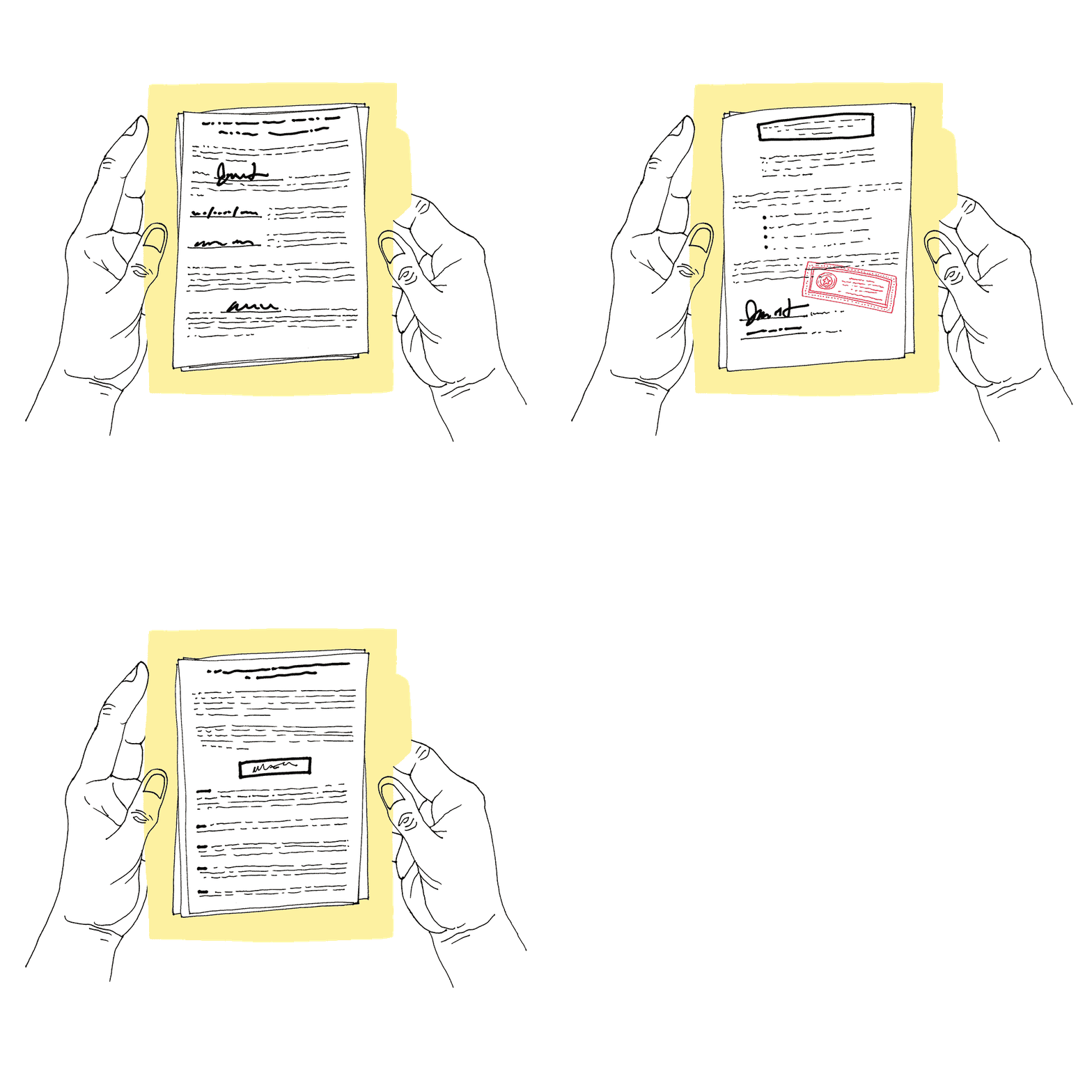
A little prep first
Getting ready for an appointment can feel overwhelming, but preparing can definitely help. Before you go, jot down anything that’s been different – changes in breathing, swelling, sleep, weight, or energy. Bring a list of medications and any past test results you have handy, like EKGs, bloodwork, or imaging notes. It can also be useful to know a bit about your family heart history, if you have it.
And if you’re able, bring someone with you. Having another set of ears – and some support – can help in keeping track of whatever comes up.
What’s been different lately?
Symptoms can change over time. Checking in with yourself can help you notice patterns that give your care team important clues about what’s going on. Let’s see how you’ve been feeling lately.
In the last month, have you noticed any of the following?
☐ Shortness of breath
☐ Needing to sit up to sleep comfortably
☐ Unexpected weight gain
☐ Swelling in feet, ankles, or legs
☐ Increased fatigue
☐ Heart palpitations or chest discomfort
☐ Lightheadedness
☐ Mental fog
☐ Feeling of fullness or bloating
☐ Decreased ability to do usual activities

Putting symptoms into words
Talking about how you feel isn’t always easy. But sharing even these details can help your cardiologist understand what your days actually look like. Try starting with simple phrases like:
- “I’ve noticed changes in my breathing during activities I used to do easily.”
- “My energy feels different – I get tired faster than I used to.”
- “Something feels ‘off,’ but I’m not sure how to describe it.”
You don’t have to have the perfect words. You just need to share what’s been changing – your care team can help you navigate the rest.